

Why Optimizing Your Resume Alone Won't Get You Hired
How to make sure your resume answers everything a hiring manager needs to see

What does it mean to optimize your resume?
When you look at all the advice out there on optimizing a resume, it generally boils down to these two buckets:
Tailoring for the role
ATS‑friendliness
1. Tailor to a specific role
Avoid generic terms and accomplishments. Instead, align it to a specific job title and posting.
Use the keywords (skills, tools, responsibilities, and values) from the job description.
Use the actual job title from the posting in your header or summary (“Assistant Designer”), not a vague or different title.
Edit old or irrelevant experience and skills
2. Keep formatting clean and ATS‑friendly
Use a simple, one to two-column layout with standard headings (“Experience,” “Education,” “Skills”)
Avoid tables and multiple text boxes
Save as a PDF
3. Focus on impact, not tasks
Describe what you did, how you did it, and what happened as a result.
Emphasize accomplishments with measurable outcomes (“increased X by 20%,” “reduced errors by 30%,” “led a team of 5”).
4. Make it skimmable
Use bullet points instead of paragraphs.
Use the standard ‘F’ or ‘E’ format for focusing the most important information (check out my issue on resume writing).
Keep the total resume length to 1 page for levels below director.
Summarize who you are and why you are a good fit at the top
5. Avoid common blockers
In the US and Canada, skip photos and personal details like marital status, age, or full home address.
Check spelling and grammar carefully
These are all excellent pieces of advice.
But doing these alone won’t ensure you are a top candidate, let alone an offer.
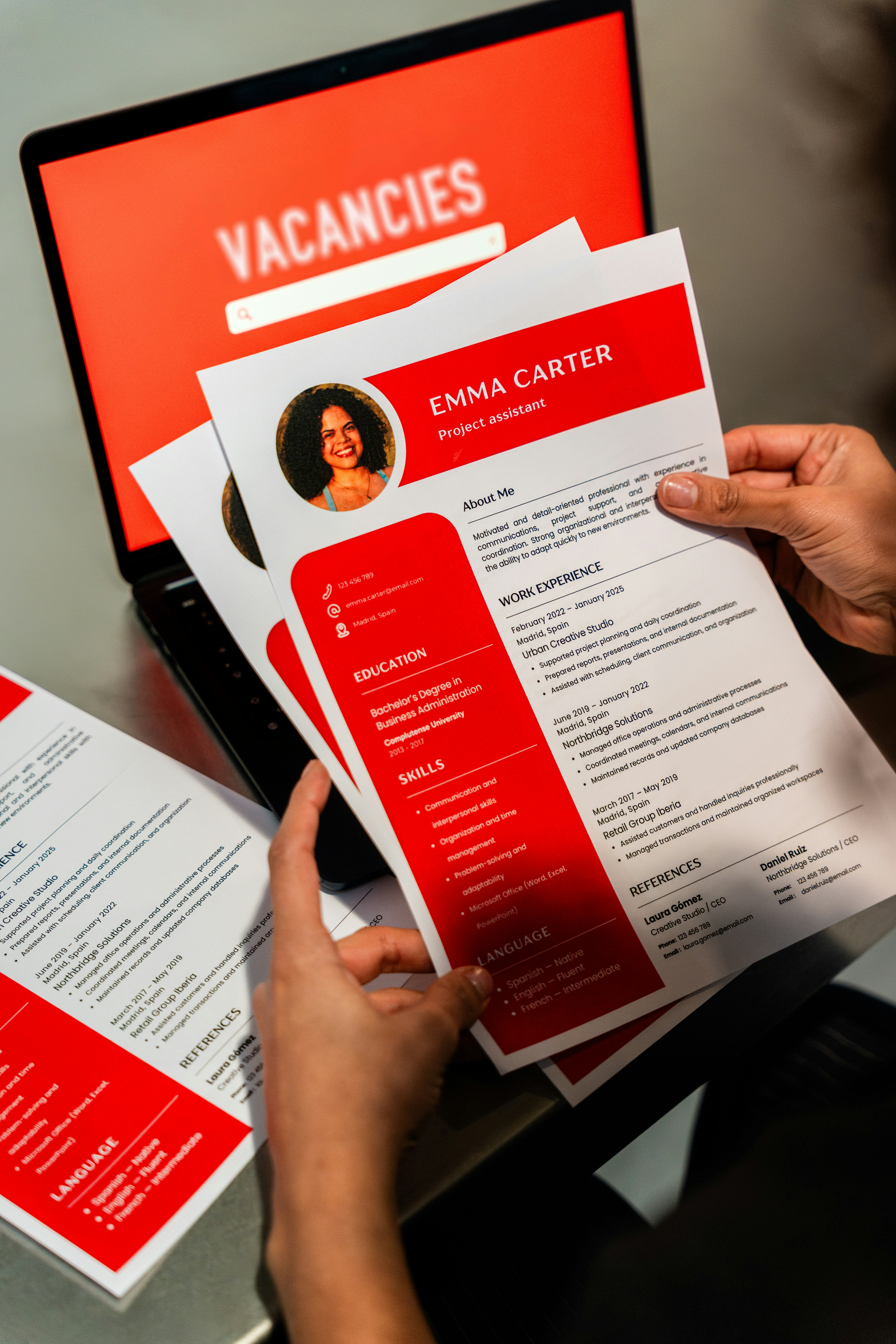
What does optimization miss?
The benefit of optimizing your resume is that you decrease the chance that an ATS system or recruiter will filter you out.
ATS and recruiters don’t hire.
They are a step in the process, not the whole process.
The big gap in optimizing is that while you are trying to crack the ATS code, you aren’t cracking the hiring manager code.
I know this because I’ve seen what comes through after this filtering process.
There’s a ton of ‘meh’s’, still some ‘absolutely not’s’, and hopefully at least a couple ‘they sound interesting’s’.
Hiring managers can still get unqualified candidates passed to them because, many times, the person writing the job posting isn’t the person writing the job description.
I know, this is ridiculous, but here we are.
So here’s what hiring managers look for:
Do they know what the job is?
Do they show they can do the job?
Do they demonstrate the soft skills I need for this role?
Let’s break this down further.
Do they know what the job is?
Managers will assess if candidates are repeating the things in the job posting or if they actually understand what the job is and entails. This is huge for entry level candidates who don’t have a ton of experience. It also means that this is an easy way to differentiate yourself from your competition.
This comes through in filling in the gaps of what might not be included in the posting, showing an understanding for how the work flows from one task to another, and tying achievements or metrics to those things.
Do they show they can do the job?
Listing tasks only gets you so far. I am looking to see if you can work independently or if you rely on someone to assign you work.
Sometimes, depending on the pool of candidates, level of training required might become a factor here. What makes this challenging for job seekers is that they don’t know who they will be competing with. It’s best to assume you are competing with someone who fits the role perfectly as written.
Which brings me to #3.
Do they demonstrate the soft skills I need for this role?
Too often applicants focus on the hard skills and altogether ignore the soft skills on their resume. Or worse, they list them like a hard skill.
Soft skills can’t be listed; they have to be demonstrated.
Examples: communication, detail-oriented, collaborative, self-sufficient, problem solver.
They are really easy to list, but difficult to back up.
The resume itself is a communication tool. Are you clearly communicating your value and potential as it matches the needs of your target audience (the hiring manager)? Attention to detail comes through in your formatting, typos (or lack thereof), and inconsistent grammar. Collaborative, self-sufficient, and problem solver are all excellent bullet points showing how you work.
The secret to cracking the resume code
This isn't rocket science. It all comes down to two things:
What does the hiring manager need for this role?
How can you make their job easier?
That’s it!
But to do that, you need to understand where the hiring manager is coming from.
Hiring managers are people, too. If they are hiring, then they are undoubtedly overworked and understaffed. They don’t have a lot of time, let alone to review a stack of candidates. They need someone who can come in and solve their problem of this extra workload and do so in a way that makes the team’s lives a little better.
TL;DR
Common optimizing advice is for ATS and recruiters, but forgets the actual decision makers — hiring managers.
Hiring managers need to know 3 things to move you to the interview stage:
Do they know what the job is?
Do they show they can do the job?
Do they demonstrate the soft skills I need for this role?
Hiring managers are just like the rest of us. And if they are hiring they are overworked and understaffed. They just need someone who can come in and solve their problem of too much work, and do so in a way that makes the team’s lives a little better.
Wish you could get a hiring manager’s take on your resume? Good news! You can get your resume and portfolio reviewed by a hiring manager experienced in coaching candidates so that you can make sure you are answering all their concerns.
Schedule your review today at: TheInternMentor.com
And for more on how to land your next opportunity, check out my book: The Design Internship Handbook!
